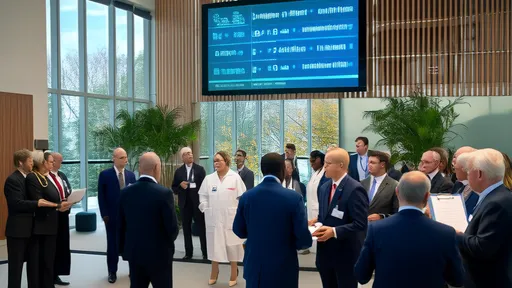
As world leaders gather in Geneva for the annual Global Summit on Sustainable Development, an unexpected conversation emerges between delegates during coffee breaks - not about carbon credits or trade agreements, but about seasonal wellness practices from their respective cultures. This seemingly trivial exchange reveals a profound connection between global environmental consciousness and personal health awareness that transcends geopolitical boundaries.
The Chinese delegation shares insights about their ancient solar term system that has guided agricultural and health practices for millennia, while Scandinavian representatives discuss their light therapy approaches during dark winter months. African delegates speak of traditional harvest ceremonies marking seasonal transitions, and South American participants describe Amazonian communities' use of seasonal plants for healing. What begins as casual conversation gradually evolves into recognition that humanity's relationship with nature's cycles forms a universal language that predates modern diplomacy.
From Macro to Micro: The Personal Impact of Global Environmental Awareness
Dr. Elena Martinez, a climate psychologist observing the summit, notes how global environmental discussions increasingly influence individual health choices. "When people understand the interconnectedness of our planetary systems," she explains, "they naturally become more attuned to their own biological rhythms within those systems. The same awareness that drives concern for melting glaciers creates curiosity about how seasonal changes affect our sleep patterns, immune function, and mental health."
This connection manifests practically as summit attendees adjust their wellness routines while traveling across time zones and climates. The Japanese delegation incorporates brief forest bathing sessions between meetings, while European participants maintain their daily cycling routines despite the unfamiliar terrain. These adaptations demonstrate how global citizens increasingly view personal health as integrated with environmental health rather than separate from it.
The Ancient Wisdom Renaissance in Modern Healthcare
Meanwhile, in medical conferences occurring simultaneously with the political summit, researchers present compelling data about seasonal medicine's validity. Dr. Arjun Patel's longitudinal study tracking 10,000 participants across five climate zones reveals that aligning lifestyle with seasonal changes reduces inflammatory markers by 23% compared to those maintaining static routines year-round. "Our ancestors weren't merely practicing superstition," Dr. Patel emphasizes. "They were sophisticated observers of nature's impact on human physiology."
This research finds practical application in hospitals from Seoul to San Francisco, where architects now design healing spaces with seasonal light exposure in mind, and nutritionists develop menus based on locally available seasonal produce. The very hospitals treating climate-related health issues increasingly embrace environment-informed healing approaches, creating a beautiful symmetry between cause and treatment.
Cultural Exchange Beyond Politics: How Seasonal Traditions Travel
As diplomatic conversations continue inside summit halls, outside in Geneva's parks and cafes, a different kind of exchange occurs. Swiss residents curious about international visitors' habits adopt Korean persimmon vinegar tonics for autumn immunity and Mexican warming spice blends for winter circulation. Meanwhile, visiting delegates discover Alpine herb traditions for respiratory health and local dairy practices tied to seasonal grazing patterns.
This organic cultural exchange demonstrates how wellness practices naturally cross borders when people connect personally. Food historian Dr. Simone Laurent observes, "Throughout history, healing traditions have traveled along trade routes and migration paths. Today, they move through global conferences and digital networks, but the principle remains - effective practices get adopted regardless of their origin."
The Business of Seasonal Wellness Goes Global
This cross-pollination of seasonal health knowledge creates new economic opportunities that transcend national markets. Finnish sauna companies now incorporate Japanese forest essential oils for different seasons, while Australian wellness retreats blend Aboriginal seasonal awareness with Scandinavian friluftsliv (open-air living) principles. The global wellness market, valued at $4.5 trillion, increasingly segments not by geography but by climate patterns and seasonal needs.
Entrepreneur Anika Chen, whose company creates seasonally-adjustable lighting systems, explains, "We're seeing demand from across the hemispheres for solutions that help people maintain biological rhythm consistency despite artificial environments. The same technology that helps Norwegian office workers through dark winters assists Dubai residents in managing extreme summer heat confinement."
Climate Change Forces Adaptation of Traditional Practices
This global exchange occurs against the challenging backdrop of climate disruption altering seasonal patterns worldwide. The very solar terms that guided Chinese agricultural and health practices for centuries now arrive at unexpected times, while European wine growers harvest weeks earlier than their ancestors did. Indigenous communities from the Arctic to the tropics report that traditional seasonal markers no longer align with actual conditions.
This environmental shift creates both crisis and innovation in seasonal wellness practices. Traditional Chinese medicine practitioners develop modified approaches for extended summer heat, while Nordic countries create new light therapy protocols for increasingly dark winters. The need to adapt ancient systems to new realities sparks collaboration between traditional knowledge holders and climate scientists.
The Digital Dimension: Technology as Seasonal Wellness Bridge
Paradoxically, the digital technology often blamed for disconnecting humans from natural rhythms now helps reconnect them. Apps developed in California use location data to suggest seasonal foods and activities, while German-engineered wearables track biological responses to seasonal changes. Korean digital platforms combine weather data with traditional medicine principles to send personalized seasonal health recommendations.
These technologies create what researchers call "digital phenology" - the electronic tracking of seasonal biological events. As these systems gather global data, they reveal fascinating patterns about human adaptation to different climate zones and seasonal transitions, creating a living database of human-nature interaction.
Educational Systems Embrace Seasonal Literacy
The intersection of global environmental education and seasonal health awareness reaches classrooms worldwide. Schools from Canada to Kenya incorporate "seasonal literacy" into curricula, teaching children to recognize local seasonal indicators and corresponding self-care practices. This education creates what sustainability experts hope will be the first generation to fully grasp humanity's embeddedness within natural systems.
Professor Kenji Yamamoto, who developed Japan's seasonal education program, observes, "When children understand that their grandparents' seasonal traditions emerged from deep observation of nature, they develop respect for both cultural heritage and ecological knowledge. This dual appreciation may be key to creating truly sustainable societies."
The Future: Integrated Global and Personal Seasonal Intelligence
As the global summit concludes with new climate agreements, the parallel conversations about seasonal wellness continue evolving. What emerges is recognition that planetary health and human health represent two expressions of the same fundamental principle: living in harmony with natural cycles. The Chinese delegate's solar terms, the Scandinavian light therapy, the Amazonian plant knowledge - all represent cultural adaptations to this universal truth.
The most forward-thinking policy makers now discuss integrating seasonal health principles into urban planning, workplace design, and healthcare systems. The same satellites monitoring deforestation might someday provide data for personalized seasonal wellness recommendations, creating unprecedented integration between global environmental management and individual health optimization.
This convergence suggests a future where checking seasonal allergy forecasts becomes as routine as checking weather reports, where business travel includes seasonal adaptation planning, and where climate treaties consider human biological needs alongside economic and environmental factors. The distance between global summit and seasonal养生 proves shorter than we imagined - both are about creating sustainable rhythms for life on this rapidly changing planet.

By /Oct 14, 2025
By /Oct 14, 2025

By Daniel Scott/Oct 14, 2025

By /Oct 14, 2025

By Benjamin Evans/Oct 14, 2025

By Ryan Martin/Oct 14, 2025
By John Smith/Oct 14, 2025
By /Oct 14, 2025

By /Oct 14, 2025

By /Oct 14, 2025

By Thomas Roberts/Oct 14, 2025
By /Oct 14, 2025
By Amanda Phillips/Oct 14, 2025
By /Oct 14, 2025
By Megan Clark/Oct 14, 2025

By Thomas Roberts/Oct 14, 2025
By /Oct 14, 2025

By /Oct 14, 2025
By /Oct 14, 2025

By /Oct 14, 2025
