In the bustling night markets of Chengdu, amid the sizzle of woks and the aromatic clouds of Sichuan peppercorns, one snack consistently draws crowds with its whimsical shape and addictive flavor: Lang Ya Tu Dou, or "Wolf Tooth Potatoes." The name itself evokes imagery of sharp, jagged edges, but the reality is far more delightful—a playful spiral of potato, crispy on the outside and tender within, bathed in a symphony of spices. While the seasoning is undoubtedly key, seasoned chefs and street food veterans alike will attest that the true soul of this dish lies not in the mix of chili powder, cumin, or garlic, but in the precision of its cut. Specifically, the use of a crinkle-cut or wave-edged knife to slice the potatoes into consistent 1cm-thick pieces is what transforms a simple root vegetable into a culinary phenomenon.
The wave-cut technique, often achieved with a specialized serrated blade or a handheld crinkle cutter, is more than just an aesthetic choice. Unlike straight cuts, which can yield flat surfaces that resist seasoning adhesion, the undulating ridges and grooves of a wave-cut create an expansive landscape of peaks and valleys on each potato slice. This increased surface area acts as a natural scaffold for spices and oils, allowing them to cling to the potato with remarkable tenacity. When these potatoes are fried, the hot oil penetrates every nook and cranny, resulting in a texture that is simultaneously crispy along the ridges and soft in the troughs. This structural advantage ensures that no bite is devoid of flavor; each piece is a self-contained parcel of perfectly balanced taste and texture.
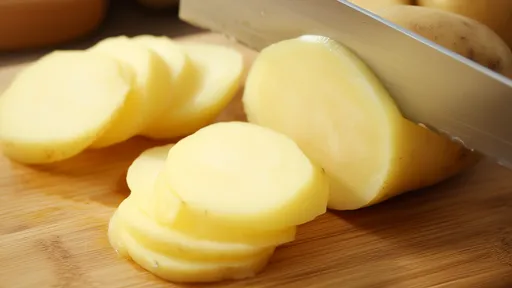
However, the magic of the wave cut is wholly dependent on consistency. A uniform 1cm thickness is the unsung hero of the entire operation. Too thin, and the delicate ridges risk burning before the interior cooks through, turning the snack into a brittle, bitter shadow of itself. Too thick, and the core remains stubbornly hard and undercooked, while the exterior soaks up excessive oil, becoming greasy and overwhelming the seasoning. The 1cm benchmark is a golden mean, discovered through generations of trial and error. It provides enough substance to achieve a fluffy, cooked interior—reminiscent of a perfect french fry—while the exterior has just enough time to crisp up into a golden-brown, flavorful crust during its brief plunge into the fryer.
The preparation process is a ritual of patience and skill. Selecting the right potato is the first step; starchy varieties like Russets are often preferred for their fluffy texture when cooked. After washing and peeling, the tuber is guided carefully against the wave blade. The resulting slices, with their signature jagged edge, are immediately submerged in cold water. This soak is crucial. It rinses off excess surface starch, which prevents the pieces from sticking together during frying and also stops them from oxidizing and turning an unappetizing grey. Once drained and thoroughly dried—a step that cannot be skipped, as water causes violent oil splatter—the potatoes are ready for their flavor destiny.
The cooking method itself, typically deep-frying, works in concert with the cut. The wave shape creates tiny pockets of air around the potato, causing it to fry more evenly and efficiently than a standard slice. As the potatoes dance in the hot oil, the ridges become delectably crisp, while the protected valleys steam slightly, cooking the interior gently. This dual-texture outcome is the hallmark of a masterfully executed Lang Ya Tu Dou. Once they achieve a perfect golden hue, they are hauled out, shaken to drain excess oil, and tossed while still piping hot in a mixture of ground Sichuan pepper, chili powder, salt, sugar, and sometimes a hint of five-spice or crushed peanuts.
Because of the intricate surface created by the wave cut, this tossing is not merely a coating but an infusion. The spices nestle into every available groove. The heat from the potato itself slightly toasts the finer powders, awakening their essential oils and deepening their aroma. The final product is a snack that is utterly moreish, with every single bite offering the same perfect ratio of crispy to soft, and spice to potato. It is a testament to how a seemingly simple technical choice in preparation can elevate a dish from mere sustenance to an unforgettable sensory experience. The wave-cut potato is not just food; it is edible engineering.
This attention to detail extends beyond the street food stall. The principle of maximizing surface area for flavor absorption is a cornerstone of many global cuisines, from the scored skin of roast pork to the deeply slashed flesh of fish before marinating. The Lang Ya Tu Dou stands as a brilliant, delicious example of this principle in its most playful form. It demonstrates that in the culinary world, form and function are inextricably linked. The iconic wolf tooth shape is therefore far from a gimmick; it is the very engine of the dish's success, a perfect marriage of clever technique and bold flavor that continues to captivate snacking enthusiasts around the world.

By /Aug 20, 2025
By /Aug 20, 2025
By /Aug 20, 2025
By /Aug 20, 2025

By /Aug 20, 2025
By /Aug 20, 2025
By /Aug 20, 2025

By /Aug 20, 2025
By /Aug 20, 2025
By /Aug 20, 2025

By /Aug 20, 2025
By /Aug 20, 2025
By /Aug 20, 2025
By /Aug 20, 2025

By /Aug 20, 2025
By /Aug 20, 2025
By /Aug 20, 2025

By /Aug 20, 2025
By /Aug 20, 2025

By /Aug 20, 2025
